


AIとAmazon BedrockによるA/Bテストの革新
A/Bテストは長年にわたり、ユーザーエクスペリエンスの最適化、メッセージングの洗練、コンバージョンフローの強化の礎となってきました。しかし、ランダムな割り当てに伝統的に依存するため、統計的有意性を達成するだけでも、時には数週間にも及ぶ長いテストサイクルを要することがよくあります。このプロセスは効果的であるものの、本質的に遅く、ユーザー行動の中に隠された初期の重要なシグナルを見逃しがちです。
実験の未来へ:Amazon Bedrock、Amazon Elastic Container Service (ECS)、Amazon DynamoDBなどの最先端サービスを使用して構築されたAI駆動型A/Bテストエンジンが登場します。この革新的なシステムは、ユーザーコンテキストをインテリジェントに分析し、実験中に動的でパーソナライズされたバリアント割り当て決定を行うことで、従来の方法を超越します。その結果はどうでしょう?ノイズが低減され、重要な行動パターンが早期に特定され、自信を持ったデータ駆動型の結論への道が劇的に加速されます。この記事では、このようなエンジンを構築するためのアーキテクチャと方法論を探求し、サーバーレスAWSサービスを活用したスケーラブルで適応性の高いパーソナライズされた実験の青写真を提供します。
従来のA/Bテストの制限を克服する
従来のA/Bテストは、単純な原則に基づいて運用されます。ユーザーを異なるバリアント(AまたはB)にランダムに割り当て、データを収集し、事前に定義された指標に基づいて勝者を宣言します。これは基本的なものですが、このアプローチには、迅速な最適化と深いインサイトを妨げる固有の制限が伴います。
- ひたすらランダムな割り当て: 初期データがユーザーの好みや行動に意味のある違いがあることを示唆している場合でも、従来のA/Bテストは厳密にランダムな分布を遵守します。これは、代替案が特定のプロファイルに対して明らかに優れたパフォーマンスを示す場合でも、ユーザーが最適でないバリアントに長期間さらされる可能性があることを意味します。
- 遅い収束: 統計的に有意な量のデータを収集する必要があるため、実験が数週間にわたって長引くことがよくあります。この遅延は、製品のイテレーションを遅らせ、収益機会を先送りし、組織を競争上の不利な立場に置く可能性があります。
- 高いノイズレベル: 一律のランダムな割り当ては、ユーザーのニーズや好みに明らかに合わないバリアントにユーザーをさらす可能性があります。この「ノイズ」は真のインサイトを不明瞭にし、効果的な戦略を見分けることを難しくし、時には明確さのためにデータをセグメント化するために広範な事後分析を必要とします。
- 手動最適化の負担: 微妙な行動パターンやセグメント固有の好みを特定するには、通常、実験終了後にかなりの手動分析が必要です。この事後的なアプローチは時間がかかり、リアルタイムのシグナルを効果的に活用できないことがよくあります。
小売のシナリオを考えてみましょう。ある企業が2つの行動喚起(CTA)ボタンをテストします。「今すぐ購入」(バリアントA)と「今すぐ購入 – 送料無料」(バリアントB)です。初期データではバリアントBの方が優れたパフォーマンスを示すかもしれません。しかし、より深い手動分析を行うと、プレミアム会員(すでに送料無料である)がバリアントBにためらいを見せる一方、ディールハンターはそれに群がるということが明らかになるかもしれません。逆に、モバイルユーザーは画面サイズのためにバリアントAを好むかもしれません。従来の方法では、これらの多様な行動を長期間にわたって平均化するため、広範な手動セグメンテーションなしには微妙な好みに対応することが困難です。AI支援割り当ての力が非常に貴重になるのはまさにここであり、リアルタイムでの適応と優れたA/Bテスト結果を可能にします。
AWSで適応型A/Bテストエンジンを構築する
適応型A/Bテストエンジンは、従来のA/Bテストからの重要な進化を示します。リアルタイムのユーザーコンテキストと初期の行動パターンを統合することで、よりスマートで動的なバリアント割り当てを可能にします。このソリューションの核となるのは、Amazon Bedrockのインテリジェントな機能であり、すべてのユーザーを固定されたバリアントにコミットする代わりに、個々のユーザーコンテキストを評価し、履歴行動データを取得し、その特定のインタラクションに最適なバリアントを選択します。
このシステムは、AWS内の堅牢なサーバーレスアーキテクチャ上に構築されており、スケーラビリティ、回復力、および効率性を保証します。
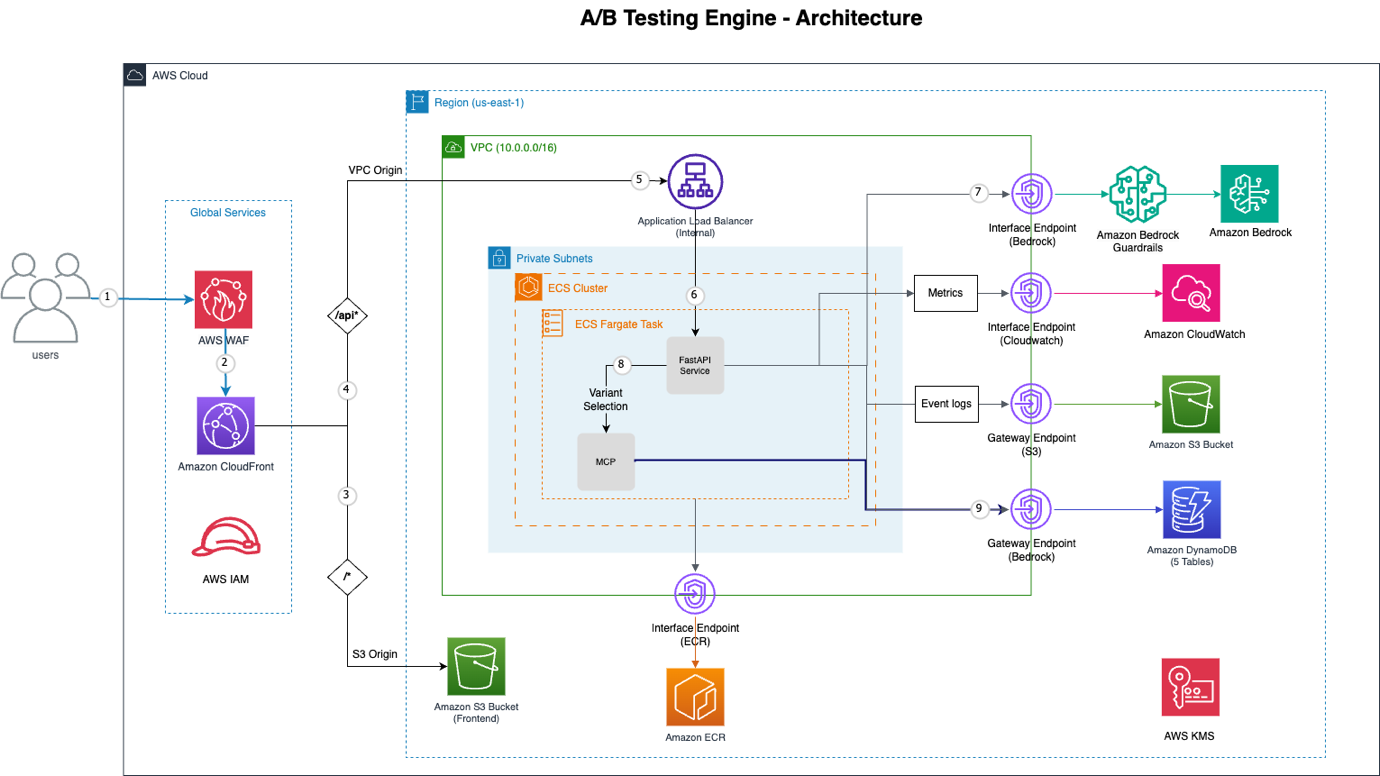
図1:A/Bテストエンジンアーキテクチャ
これを可能にする主要なAWSコンポーネントの内訳は次のとおりです。
| AWSサービス | 機能 |
|---|---|
| Amazon CloudFront | 分散型サービス拒否(DDoS)保護、SQLインジェクション抑止、およびレート制限を提供するグローバルコンテンツ配信ネットワーク(CDN)。 |
| AWS WAF | 強化されたセキュリティのためにCloudFrontと統合されたウェブアプリケーションファイアウォール。 |
| VPCオリジン | Amazon CloudFrontから内部のApplication Load Balancerへのプライベート接続を確立し、バックエンドサービスのパブリックインターネット露出を排除します。 |
| AWS Fargateを使用したAmazon ECS | FastAPIアプリケーションを実行するサーバーレスコンテナオーケストレーションプラットフォームで、サーバー管理なしに高可用性とスケーラビリティを保証します。 |
| Amazon Bedrock | インテリジェントなバリアント選択のためにネイティブツール使用を伴うClaude Sonnetのようなモデルを利用する中央AI決定エンジン。 |
| Model Context Protocol (MCP) | ユーザー行動と実験データへの構造化されたアクセスを提供し、Bedrockが特定の情報を効率的に取得できるようにします。 |
| VPCエンドポイント | Bedrock、DynamoDB、S3、ECR、CloudWatchなどのAWSサービスへのプライベート接続を保証し、セキュリティを強化しレイテンシを削減します。 |
| Amazon DynamoDB | 実験、イベント、割り当て、ユーザープロファイル、バッチジョブ用の5つのテーブルを提供する完全にマネージドされたサーバーレスNoSQLデータベース。 |
| Amazon S3 | 静的フロントエンドのホスティングとイベントログの永続的なストレージに利用され、高可用性とスケーラビリティを提供します。 |
このアーキテクチャは、強力で適応性の高い実験プラットフォームを提供し、組織がランダムな割り当ての制限を超え、A/Bテストに対する真にインテリジェントなアプローチを採用することを可能にします。
Amazon Bedrockのインテリジェントなバリアント割り当てにおける役割
このA/Bテストエンジンの真の革新は、ユーザーコンテキスト、履歴行動、類似ユーザーのパターン、リアルタイムのパフォーマンス指標といった複数のデータポイントを組み合わせて、最も効果的なバリアントを選択する能力にあります。このインテリジェンスの中核にあるのは、Amazon Bedrockであり、特にClaude Sonnetのような高度な生成AIモデルをネイティブツール使用でデプロイする機能です。この強力な組み合わせにより、システムは熟練したA/Bテストスペシャリストを模倣し、個々のユーザーインタラクションに適応するリアルタイムのデータ駆動型意思決定を行うことができます。
ユーザーがバリアントリクエストを開始すると、システムは単に「A」または「B」を選択するわけではありません。代わりに、Amazon Bedrockが情報に基づいた最適な決定を下すために必要なすべての情報を提供する包括的なプロンプトを構築します。このプロセスは、Bedrockが複雑な指示を解釈し、事前定義されたツールを利用して追加のコンテキストを収集する能力を活用し、割り当てを推奨する前にAIが全体像を把握できるようにします。このようなインテリジェントエージェントが本番環境でどのように評価されるかについて深く理解するには、本番環境向けAIエージェントの評価:Strandsの評価に関する実践ガイドのようなリソースを参考にしてください。
AI意思決定プロンプト:コンテキストインテリジェンスの実践
Amazon Bedrockの意思決定の有効性は、AIに情報を提供する綿密に作成されたプロンプト構造にかかっています。このプロンプトは主に2つの部分から構成されます。Bedrockの役割と振る舞いを定義するシステムプロンプトと、意思決定のための特定のリアルタイムコンテキストデータを提供するユーザープロンプトです。この設計により、AIは定義された境界内で動作しながら、豊富で動的な情報を活用できます。
Amazon Bedrockが受け取るプロンプト構造の概念的な例を以下に示します。
# システムプロンプト(Amazon Bedrockの役割と動作を定義)
system_prompt =
"""
You are an expert A/B testing optimization specialist with access to tools for gathering user behavior data.
CRITICAL INSTRUCTIONS:
1. ALWAYS call get_user_assignment FIRST to check for existing assignments
2. Only call other tools if you need specific information to make a better decision
3. Call tools based on what information would be valuable for this specific decision
4. If user has existing assignment, keep it unless there's strong evidence (30%+ improvement) to change
5. CRITICAL: Your final response MUST be ONLY valid JSON with no additional text, explanations, or commentary before or after the JSON object
Available tools:
- get_user_assignment: Check existing variant assignment (CALL THIS FIRST)
- get_user_profile: Get user behavioral profile and preferences
- get_similar_users: Find users with similar behavior patterns
- get_experiment_context: Get experiment configuration and performance
- get_session_context: Analyze current session behavior
- get_user_journey: Get user's interaction history
- get_variant_performance: Get variant performance metrics
- analyze_user_behavior: Deep behavioral analysis from event history
- update_user_profile: Update user profile with AI-derived insights
- get_profile_learning_status: Check profile data quality and confidence
- batch_update_profiles: Batch update multiple user profiles
Make intelligent, data-driven decisions. Use the tools you need to gather sufficient context for optimal variant selection.
RESPONSE FORMAT: Return ONLY the JSON object. Do not include any text before or after it."""

# ユーザープロンプト(特定の決定コンテキストを提供)
prompt = f"""Select the optimal variant for this user in experiment {experiment_id}.

USER CONTEXT:
- User ID: {user_context.user_id}
- Session ID: {user_context.session_id}
- Device: {user_context.device_type} (Mobile: {bool(user_context.is_mobile)})
- Current Page: {user_context.current_session.current_page}
- Referrer: {user_context.current_session.referrer_type or 'direct'}
- Previous Variants: {user_context.current_session.previous_variants or 'None'}

CONTEXT INSIGHTS:
{analyze_user_context()}

PERSONALIZATION CONTEXT:
- Engagement Score: {profile.engagement_score:.2f}
- Conversion Likelihood: {profile.conversion_likelihood:.2f}
- Interaction Style: {profile.interaction_style}
- Previously Successful Variants: {
この包括的なプロンプトにより、Amazon Bedrockはインテリジェントなエージェントとして機能し、粗雑なランダム割り当てに頼るのではなく、微妙なニュアンスのある決定を下すことができます。データ取得と分析のための様々なツールへのアクセスを提供することで、モデルが個々のユーザーの好みと実験目標を最適化するために必要なすべての情報を確実に持つことができます。このアプローチは、A/Bテストの精度と速度を大幅に向上させ、より効果的でパーソナライズされたユーザーエクスペリエンスを促進します。このようなネイティブツール使用は、Amazon Bedrock AgentCoreで探求されている概念と同様に、強力な機能です。
スケーラブルでパーソナライズされた実験を解き放つ
AI、特にAmazon Bedrockを介したAIのA/Bテスト手法への統合は、広範なランダム化された実験から、正確で適応的かつパーソナライズされたインタラクションへの決定的な転換を意味します。このAI駆動型エンジンは、収束の遅さや高いノイズといった従来のアプローチの制限を軽減するだけでなく、リアルタイム最適化のための比類のない機能をもたらします。個々のユーザーコンテキスト、行動履歴、予測インサイトに基づいてバリアントを動的に割り当てることで、組織はより迅速な結果を達成し、より深く実用的なインテリジェンスを獲得し、真に tailored されたユーザーエクスペリエンスを提供できます。
Amazon ECS FargateやAmazon DynamoDBのようなAWSサービスによって支えられるサーバーレスアーキテクチャは、この洗練されたシステムがスケーラブルで費用対効果が高く、手動介入なしに様々な負荷を処理できることを保証します。この技術的飛躍により、企業は一般的なオーディエンスにとって「勝利」するバリアントを単に特定するだけでなく、あらゆる瞬間に個々のユニークなユーザーに何が最も響くかを理解する方向へと進むことができます。ユーザーエクスペリエンス最適化の未来は、間違いなく適応的、インテリジェント、そしてAIによって駆動され、デジタル製品とサービスが進化する方法の新しい基準を設定します。
よくある質問
What are the primary limitations of traditional A/B testing methods?
How does an AI-powered A/B testing engine improve upon conventional A/B testing?
Which core AWS services are utilized to build this AI-powered A/B testing engine?
What role does Amazon Bedrock play in the intelligent variant assignment process?
What is the Model Context Protocol (MCP) and its significance in this architecture?
How does the AI decision prompt structure facilitate optimal variant selection?
What are the long-term benefits of implementing AI-powered A/B testing for organizations?
最新情報を入手
最新のAIニュースをメールでお届けします。