


Revolutionizing Maritime Anomaly Analysis with Agentic AI
The vast, intricate world of global maritime activity presents unique challenges for security, intelligence, and commercial operations. Identifying and understanding unusual vessel behavior – from unexpected movements to deviations from known patterns – often requires immense time, deep domain expertise, and the correlation of disparate data sources. Windward, a leader in Maritime AI™, has long provided critical intelligence for marine operations. Now, in collaboration with AWS, Windward is leveraging agentic generative AI to transform this process, moving from isolated alerts to comprehensive, contextual intelligence.
This groundbreaking partnership aims to empower maritime analysts, drastically reducing investigation times and allowing them to focus on high-value decision-making rather than arduous data collection. By fusing geospatial intelligence with advanced generative AI, Windward's new solution provides a 360° view, anticipating threats and protecting critical assets at sea with unprecedented speed and precision.
The Challenge: From Data Overload to Actionable Insights
Historically, maritime anomaly investigation was a highly manual and time-intensive endeavor. Analysts would spend hours sifting through fragmented information, trying to connect dots between various data streams to understand a vessel's anomalous behavior. This process demanded not only significant effort but also profound domain expertise to interpret the nuances of maritime activities, weather patterns, and geopolitical events.
Windward's existing Early Detection system successfully identifies suspicious patterns, but the goal was to accelerate the path from detection to decision-making. To optimize the analytical workflow and provide truly "mission-ready" insights, Windward identified three key strategic improvements needed:
- Unified Workflow: Minimize the need for analysts to consult external data sources, creating a seamless and focused analytical environment.
- Expertise Optimization: Automate the collection and initial correlation of contextual data (weather, news, related alerts), allowing domain experts to dedicate their valuable time to strategic interpretation and decision-making.
- Comprehensive Coverage: Streamline the synthesis of information to enable more rapid and in-depth investigation of multiple alerts concurrently.
To address these ambitious goals, Windward partnered with the AWS Generative AI Innovation Center to develop MAI Expert™, the first generative AI maritime agent capable of automatically contextualizing complex maritime anomalies.
Agentic Architecture: Powering Contextual Intelligence with AWS
The heart of Windward's enhanced solution lies in its multi-step, AI-powered architecture, deployed on AWS. This system automatically fetches relevant data from various internal and external sources and uses this information to generate a textual description that thoroughly contextualizes maritime anomaly events.
The process begins when an anomaly is identified by the Windward Early Detection system. Relevant metadata—such as anomaly timestamp, region coordinates, anomaly type, and vessel class—is extracted from Windward's internal database.
This metadata is then fed into an agentic analysis system powered by large language models (LLMs) on Amazon Bedrock. The entire multi-step anomaly analysis pipeline is orchestrated using AWS Step Functions, ensuring a robust and scalable workflow.
The first step in this orchestrated process involves querying multiple, diverse external data sources to gather relevant background information:
- Real-time News Feed: Alerts and event signals discovered from public data are fetched and filtered based on the maritime anomaly's time and location.
- Intelligent Web Search: LLMs generate precise search queries, enabling the retrieval of up-to-date web search results that provide real-time context for the anomaly.
- Weather Data: An external API is utilized to retrieve critical weather data, including temperature, wind speed, and precipitation, for the specific location and time of the anomaly.
Each data source is queried using a separate AWS Lambda function. This modular approach ensures efficiency and scalability, allowing for easy integration of new data sources as needed.
Dynamic Self-Reflection and Data Curation
A core innovation in this agentic solution is its self-reflection capability, which dynamically determines the need for additional data retrieval. After the initial data collection from news, web search, and weather, the pipeline moves to a second step. Here, a separate LLM—powered by Anthropic's Claude through Amazon Bedrock—examines the retrieved data items.
This LLM is instructed to decide whether the data collected so far is sufficient to explain the anomaly or if certain aspects related to the event are still missing. It can then either generate a new, more refined search query for additional web results or signal the pipeline to proceed. This intelligent feedback loop, depicted in Figure 2, allows the system to proactively seek out more comprehensive context, appending it to previously gathered information.
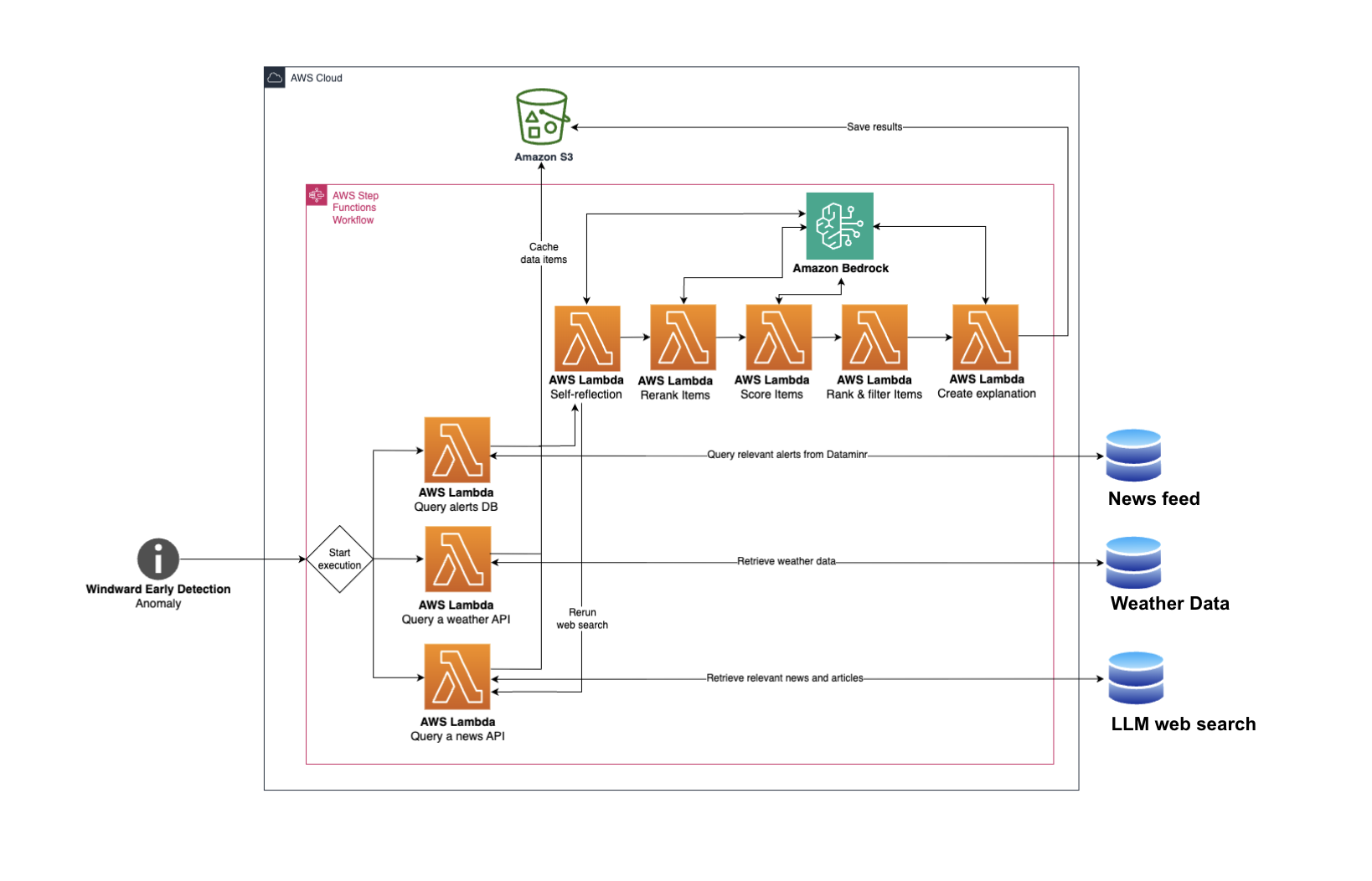 Figure 1. Solution architecture demonstrating AWS services and generative AI.
 Figure 2. Self-reflection logic in the agentic anomaly analysis system.
Following this dynamic data retrieval and self-reflection phase, the system employs a two-stage filtering and ranking process to remove irrelevant news items and ensure the highest quality context:
- Re-ranking with Amazon Rerank: An AI model, Amazon Rerank, sorts the initial set of data items according to their relevance to the anomaly. This step is crucial for maintaining high recall, efficiently reducing the pool of candidates for the next stage.
- LLM-based Precision Scoring: Each of the top-ranked items is then further scored by an LLM across multiple dimensions, including time, location, and matching vessel type. The system assigns relevance scores between 0 and 100, retaining only those data items exceeding a predefined threshold. This ensures high precision, guaranteeing that only the most pertinent information contributes to the final analysis.
Actionable Insights: The Contextualized Report
Finally, the meticulously filtered and ranked data is passed to another LLM. This LLM synthesizes all the gathered intelligence to generate a concise, contextualized report on the anomaly. The report summarizes potential causes, risks, and implications of the detected maritime event. Crucially, it is written for Windward’s customers and directly cites all data sources used, providing full transparency and allowing users to verify information and delve deeper by following provided links.
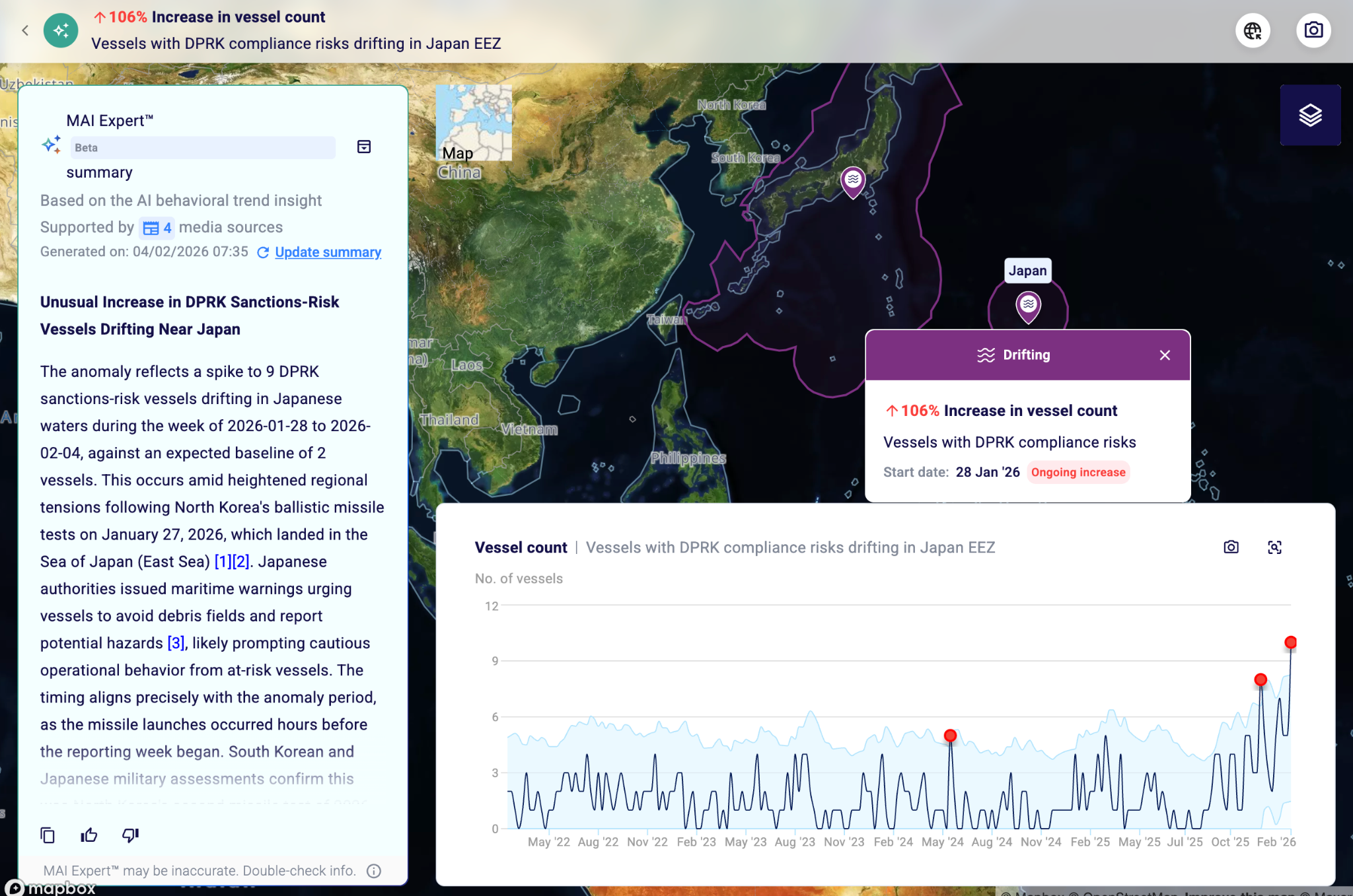 Figure 3. Example of a generated anomaly report from Windward's MAI Expert™.
This output drastically reduces the cognitive load on analysts, presenting them with a ready-made narrative that explains the anomaly within its broader operational and geopolitical context.
Evaluation and Impact
The end-to-end system is rigorously evaluated against a comprehensive set of historical maritime anomalies. This evaluation often involves an LLM-as-a-judge approach, assessing the quality, accuracy, and completeness of the generated contextual reports.
The implications of this agentic generative AI solution are profound. By automating the laborious process of data gathering and correlation, Windward empowers maritime analysts to:
- Enhance Efficiency: Significantly reduce the time spent on investigation, freeing up valuable human resources.
- Improve Situational Awareness: Gain a deeper, more contextual understanding of anomalies, moving beyond isolated alerts to comprehensive intelligence.
- Accelerate Decision-Making: Enable faster and more informed decisions, critical for anticipating threats and protecting assets in dynamic maritime environments.
- Optimize Expertise: Allow domain experts to focus on strategic interpretation and high-level analysis, leveraging their unique skills where they matter most.
The collaboration between Windward and AWS exemplifies how cutting-edge generative AI and cloud infrastructure can be harnessed to solve complex real-world problems, transforming critical sectors like maritime intelligence and setting a new standard for contextual anomaly analysis.
Frequently Asked Questions
What is Windward's MAI Expert™ and how does it utilize generative AI?
How does the agentic maritime anomaly analysis solution work?
What AWS services are central to Windward's generative AI solution?
What are the primary challenges Windward aimed to solve with this generative AI approach?
How does the system ensure the relevance of retrieved information for a specific anomaly?
Stay Updated
Get the latest AI news delivered to your inbox.