

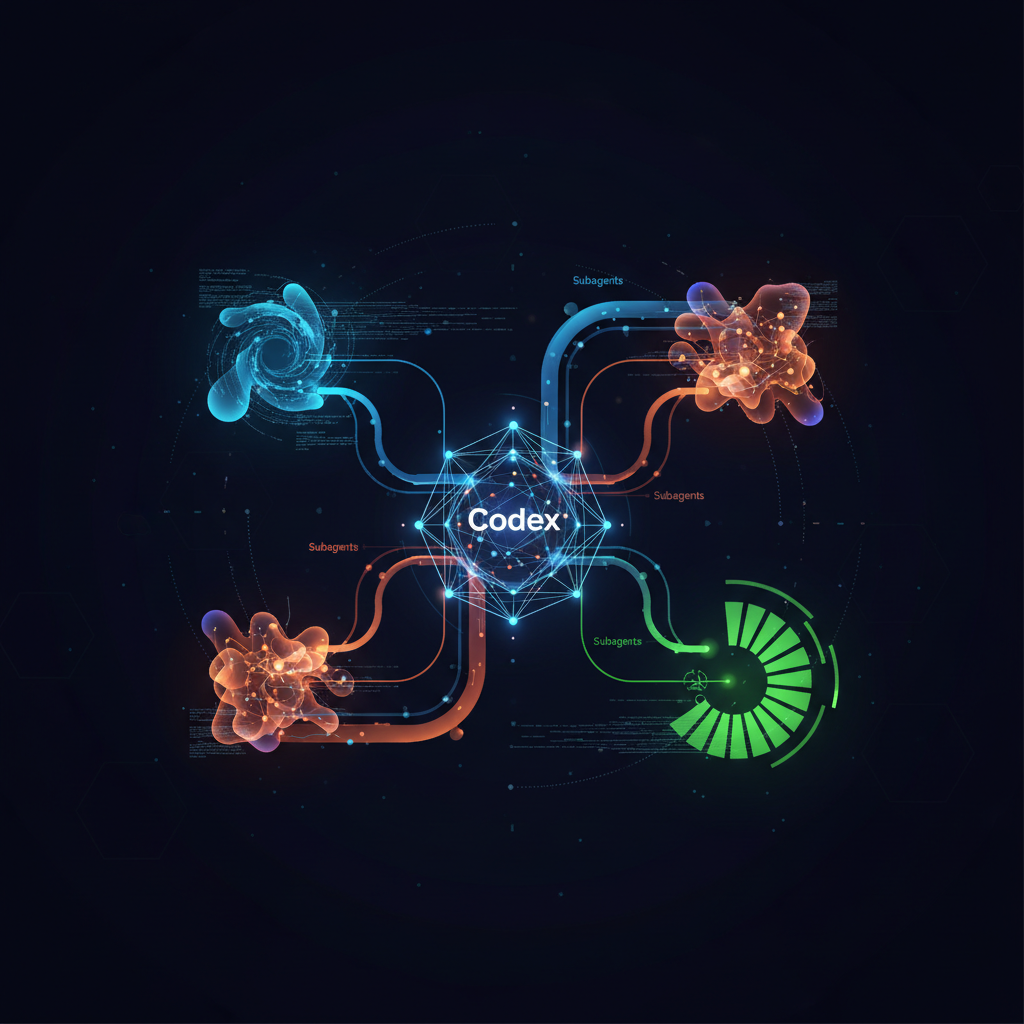
Codexサブエージェント:複雑なAIワークフローを革新する
急速に進化するAI開発の分野において、複雑で多面的なタスクを効率的に管理することは最重要課題です。OpenAIのCodexは、強力なAIコード生成および支援ツールであり、革新的なサブエージェント機能によってこの課題に正面から取り組んでいます。サブエージェントは、開発者が複雑な問題を管理可能な並列処理可能な単位に分解し、それぞれを特化型AIエージェントが処理できるようにします。このアプローチにより、特に広範なコードベースの探索、多段階機能の実装、包括的なコードレビューといったタスクにおいて、AI支援開発の効率と深度が劇的に向上します。
サブエージェントは、プライマリのCodexインスタンスが、並列で動作する専用の特化型エージェントを生成することを可能にすることで機能します。これらのエージェントは、異なるモデルと指示で構成でき、問題の特定の側面に焦点を当てることができます。個々のタスクが完了すると、Codexはそれらの結果をインテリジェントに収集し統合し、統一された包括的な応答を提供します。この方法は、コンテキスト汚染やコンテキスト劣化といった単一エージェントシステムに内在する制限を克服するために重要であり、複雑なタスクの各部分が必要な集中的な注意を受けることを保証します。理論的な基礎についてより深く掘り下げるには、エージェント型AIの運用化パート1:ステークホルダーガイドのような概念を探求することで、貴重な背景知識を得ることができます。
Codexはどのようにサブエージェントのワークフローをオーケストレーションするか
Codexサブエージェントの力は、分散タスクのシームレスなオーケストレーションにあります。開発者が複雑なクエリを開始すると、Codexは複数のサブエージェントに作業を委任する機会をインテリジェントに特定します。このプロセスには、新しいサブエージェントの生成、それぞれへの特定の指示のルーティング、そしてそれらの個々の結果の辛抱強い待機が含まれます。すべてのサブエージェントが割り当てを完了すると、Codexはそれらの出力を収集し、統合された一貫性のある応答に合成します。
理解しておくべき重要な側面は、サブエージェントは特定のプロンプトまたは事前定義された構成を介して明示的に要求された場合にのみ生成されるということです。この並列処理は速度と包括性において大きな利点を提供しますが、各サブエージェントはモデルとツールとの相互作用のためにトークンを消費することに注意することが重要です。したがって、サブエージェントのワークフローは、同等の単一エージェントの実行よりも本質的に多くのトークンを消費します。開発者は、プロンプトと構成を設計する際にこの点に留意する必要があります。
サブエージェントを使用して多面的なコードレビューを開始する以下のプロンプトの例を検討してください。
I would like to review the following points on the current PR (this branch vs main).
Spawn one agent per point, wait for all of them, and summarize the result for each point.

1. Security issue
2. Code quality
3. Bugs
4. Race conditions
5. Test flakiness
6. Maintainability of the code
このシナリオでは、Codexはリストされたレビュー項目のそれぞれに特化した6つの異なるサブエージェントを起動する可能性が高いです。各エージェントが分析を完了した後、Codexはその結果を単一の構造化されたレポートにまとめ、プルリクエストの全体像を提供します。これは、特化型AIエンティティ間でワークロードを分散することによって得られる効率の例です。
サブエージェントエコシステムの管理とセキュリティ確保
効果的な管理と堅牢なセキュリティは、サブエージェントを扱う際の重要な考慮事項です。Codexは、サブエージェントの活動を監視し、サンドボックス化された環境内での安全な操作を保証するためのツールとメカニズムを提供します。
インタラクティブなCLIセッションでは、開発者は/agentコマンドを使用してアクティブなエージェントスレッドを切り替えたり、進行中のプロセスを検査したり、特定のサブエージェントを誘導したりできます。このきめ細かな制御により、個々のエージェントの進行状況をリアルタイムで調整・監視できます。また、Codexに実行中のサブエージェントを停止させたり、完了したスレッドを閉じたりして、リソースを管理し焦点を絞ることも明示的に要求できます。
セキュリティは最も重要であり、サブエージェントはメインのCodexセッションから現在のサンドボックスポリシーを継承します。これにより、それらの操作が事前定義された安全およびアクセス規則に準拠することが保証されます。特にインタラクティブなCLIセッションで、非アクティブなエージェントスレッドから承認要求が発生した場合、Codexはこれらをユーザーにインテリジェントに提示します。承認オーバーレイはソーススレッドを示し、アクションを承認、拒否、または応答する前に、'o'を押してそのスレッドを開き、検査することで情報に基づいた決定を下すことができます。これにより、盲目的な承認を防ぎ、開発者の監視を維持します。
非インタラクティブなフローや、新たな承認を提示できない状況では、新しい承認を必要とするアクションは自動的に失敗し、Codexはエラーを親ワークフローに報告します。このフェイルセーフメカニズムは、自動化されたコンテキストでの不正なアクションを防ぎます。さらに、Codexは、/approvalsや--yoloフラグを介して行われた変更など、親のターンのライブランタイムオーバーライドを生成された子に再適用し、エージェント階層全体で一貫したセキュリティ体制を確保します。上級ユーザー向けには、個々のカスタムエージェントのサンドボックス構成をオーバーライドすることも可能であり、例えばエージェントを「読み取り専用」としてマークすることで、その権限をきめ細かく制御できます。
カスタムサブエージェントを定義してタスクを調整する
Codexは、汎用フォールバックのdefault、実行中心のタスク向けのworker、読み込み集約型コードベース探索向けのexplorerなど、いくつかの組み込みエージェントを提供していますが、サブエージェントシステムの真の力はその拡張性にあります。開発者は、高度に特化した要件に対応するために独自のカスタムエージェントを定義し、独自のプロジェクトコンテキストに合わせてAIの動作を調整できます。
カスタムエージェントは、スタンドアロンのTOMLファイルを使用して定義されます。これらのファイルは、個人用エージェントの場合は~/.codex/agents/に、プロジェクトスコープのエージェントの場合は.codex/agents/に配置できます。各TOMLファイルは、本質的に構成レイヤーとして機能し、カスタムエージェントが親セッションから継承されるはずの設定をオーバーライドできるようにします。これには、使用されるAIモデル、その推論の労力、サンドボックスモード、さらには特定のスキル構成などの重要なパラメータが含まれます。
すべてのスタンドアロンカスタムエージェントファイルは、次のフィールドを必ず定義する必要があります。
name: エージェントの一意の識別子。Codexが生成または参照する際に使用します。description: Codexがこのエージェントをいつ展開するかを理解するのに役立つ、人間が読めるガイドライン。developer_instructions: エージェントの動作と操作ロジックを規定するコアな指示セット。
nickname_candidates、model、model_reasoning_effort、sandbox_mode、mcp_servers、skills.configなどのオプションフィールドも含まれる場合があります。これらが省略された場合、これらの設定は親セッションから継承され、デフォルトが許容される場合は構成が簡素化されます。エージェントの指示に直接影響するプロンプトエンジニアリングのベストプラクティスについては、Codexプロンプティングガイドのようなリソースを参照してください。
nameフィールドは、カスタムエージェントの決定的な識別子です。ファイル名をエージェント名と一致させることは一般的で推奨される慣例ですが、TOMLファイル内のnameフィールドが究極の真実の源です。nickname_candidatesフィールドは、ユーザーエクスペリエンスに役立つ追加機能であり、Codexが生成されたエージェントにより読みやすい表示名を割り当てることを可能にし、複雑なマルチエージェントシナリオで特に役立ちます。
グローバル設定と高度なサブエージェント構成
個々のカスタムエージェントの定義を超えて、Codexはサブエージェントワークフローの全体的な動作を管理するためのグローバル設定を提供します。これらの設定は通常、メイン構成ファイルの[agents]セクションにあり、リソース割り当てと運用パラメータを一元的に制御できます。
主要なグローバルサブエージェント設定の内訳は次のとおりです。
| フィールド | タイプ | 必須 | 目的 |
|---|---|---|---|
agents.max_threads | 数値 | いいえ | 同時に開くことができるエージェントスレッドの数を制限します。設定されていない場合、デフォルトは6です。 |
agents.max_depth | 数値 | いいえ | 生成されたエージェントのネストの深さを制限します(ルートセッションは0から始まります)。デフォルトは1です。即時子を超える再帰的な委任を防ぎ、トークン使用量と遅延を管理します。 |
agents.job_max_runtime_seconds | 数値 | いいえ | spawn_agents_on_csvジョブのワーカーごとのデフォルトタイムアウトを設定します。設定されていない場合、デフォルトは1800秒(30分)です。 |
agents.max_threads設定(デフォルトは6)は、同時に動作できるサブエージェントの数を制限することで、過剰なリソース消費に対する保護を提供します。agents.max_depth設定(デフォルトは1)は特に重要です。より深いネストは複雑な委任にとって魅力的に見えるかもしれませんが、この値を増やすと、繰り返しのファンアウトによりトークン使用量、遅延、およびローカルリソース消費が大幅に増加する可能性があります。特定の再帰的委任パターンが絶対に必要であり、かつ慎重に管理されている場合を除き、デフォルトを維持することが一般的に推奨されます。
カスタムエージェントファイルには、必須フィールド以外の他のサポートされているconfig.tomlキーを含めることもでき、その構成可能性を拡張します。このモジュール化された階層的な構成アプローチにより、開発者はAIエージェントをきめ細かく制御でき、特定の開発ニーズに合わせてパフォーマンス、コスト、セキュリティを最適化できます。これらの強力なサブエージェント機能を理解し活用することで、開発者はAI支援コーディングの限界を押し広げ、開発ワークフローを大幅に強化できます。
よくある質問
What are Codex subagents and how do they enhance AI development workflows?
How does Codex manage the orchestration of multiple subagents?
What are the security considerations and controls for Codex subagents?
How can developers create and utilize custom agents within Codex?
What global settings are available for managing subagent behavior in Codex?
What are the primary advantages of using subagents for complex tasks?
最新情報を入手
最新のAIニュースをメールでお届けします。