


חולל מהפכה בחיפוש וידאו עם הטמעות מולטימודליות
תעשיית המדיה והבידור שופעת אוקיינוסים עצומים של תוכן וידאו. החל מצילומים ארכיוניים ועד להעלאות יומיות, הנפח העצום הופך את שיטות גילוי התוכן המסורתיות – תיוג ידני וחיפושים מבוססי מילות מפתח – לבלתי יעילות יותר ויותר ולעיתים קרובות לא מדויקות. גישות מיושנות אלו מתקשות ללכוד את העושר המלא וההקשר המנומר הטמון בווידאו, מה שמוביל להחמצת הזדמנויות לשימוש חוזר בתוכן, הפקה מהירה יותר וחוויות צפייה משופרות.
היכנסו לעידן ההטמעות המולטימודליות. AWS מובילה פתרון שמתעלה על מגבלות אלו, ומאפשר יכולות חיפוש סמנטי על פני מערכי נתונים עצומים של וידאו. על ידי רתימת העוצמה של מודלי Amazon Nova ושירות Amazon OpenSearch Service, יוצרי ומפיצי תוכן יכולים להתעלות על מילות מפתח שטחיות כדי להבין באמת ולגשת לספריות המדיה שלהם. גישה חדשנית זו מאפשרת שאילתות בשפה טבעית לחקור את עומקי המידע החזותי והשמיעתי, ומביאה דיוק חסר תקדים לגילוי תוכן.
AWS מדגימה יכולת זו בקנה מידה מרשים, ועיבדה 792,270 סרטונים מ-AWS Open Data Registry, הכוללים 8,480 שעות של תוכן וידאו. מיזם שאפתני זה, שלקח רק 41 שעות לעבד למעלה מ-30.5 מיליון שניות של וידאו, מדגיש את יכולת ההרחבה והיעילות של גישה זו המונעת על ידי AI. עלות השנה הראשונה, כולל עיבוד חד פעמי ושירות OpenSearch שנתי, הוערכה בסכום תחרותי ביותר של 23,632 דולר (עם מופעים שמורים של OpenSearch Service) עד 27,328 דולר (עם לפי דרישה). פתרון כזה משנה באופן מהותי את האופן שבו חברות מדיה מתקשרות עם הנכסים הדיגיטליים שלהן, ופותח אפיקים חדשים לייצור רווחים מתוכן ותהליכי עבודה בהפקה. שינוי פרדיגמה זה לעבר הבנה סמנטית הוא התפתחות קריטית עבור AI ארגוני בתחום המדיה.
הבנת ארכיטקטורת אגם הנתונים המולטימודלי הניתנת להרחבה
בליבתו, מערכת חיפוש וידאו מולטימודלית חזקה זו בנויה על שני תהליכי עבודה מקושרים: עיבוד וידאו וחיפוש. רכיבים אלו משתלבים בצורה חלקה ליצירת אגם נתונים מבוסס AI המבין והופך את פרטיו המורכבים של תוכן וידאו לניתנים לחיפוש.
צינור עיבוד וידאו
צינור העיבוד מתוכנן לעיבוד מקבילי ויעילות. הוא משתמש בארבעה מופעי Amazon EC2 c7i.48xlarge, המפעילים עד 600 עובדים מקבילים כדי להשיג קצב עיבוד של 19,400 סרטונים לשעה. סרטונים שהועלו בתחילה ל-Amazon S3 מעובדים לאחר מכן על ידי ה-API האסינכרוני של Amazon Nova Multimodal Embeddings. API זה מפצל סרטונים באופן חכם למקטעים אופטימליים בני 15 שניות – איזון בין לכידת שינויי סצנה משמעותיים לבין ניהול נפח ההטמעות שנוצרות. כל מקטע מומר לאחר מכן להטמעה במימד 1024, המייצגת את התכונות האודיו-ויזואליות המשולבות שלו. בעוד שהטמעות במימד 3072 מציעות נאמנות גבוהה יותר, האפשרות במימד 1024 מספקת חיסכון של פי 3 בעלות האחסון עם השפעה מינימלית על הדיוק עבור יישום זה, מה שהופך אותה לבחירה פרגמטית בקנה מידה.
כדי לשפר עוד יותר את יכולת החיפוש, Amazon Nova Pro (או Nova 2 Lite החדש והחסכוני יותר) משמש ליצירת 10-15 תגים תיאוריים לכל סרטון מטקסונומיה מוגדרת מראש. גישה כפולה זו מבטיחה שניתן יהיה לגלות תוכן הן באמצעות דמיון סמנטי והן באמצעות התאמת מילות מפתח מסורתית. הטמעות אלו מאוחסנות באינדקס k-NN של OpenSearch, המותאם לחיפוש דמיון וקטורי, בעוד שהתגים התיאוריים מאונדקסים באינדקס טקסט נפרד. הפרדה זו מאפשרת שאילתות גמישות ויעילות. הצינור מנהל את מגבלות הבו-זמניות של Bedrock (30 עבודות בו-זמניות לכל חשבון) באמצעות מנגנון תור עבודות וסקר חזק, המבטיח עיבוד רציף ותואם.
להלן ייצוג ויזואלי של תהליך העיבוד המתוחכם הזה:
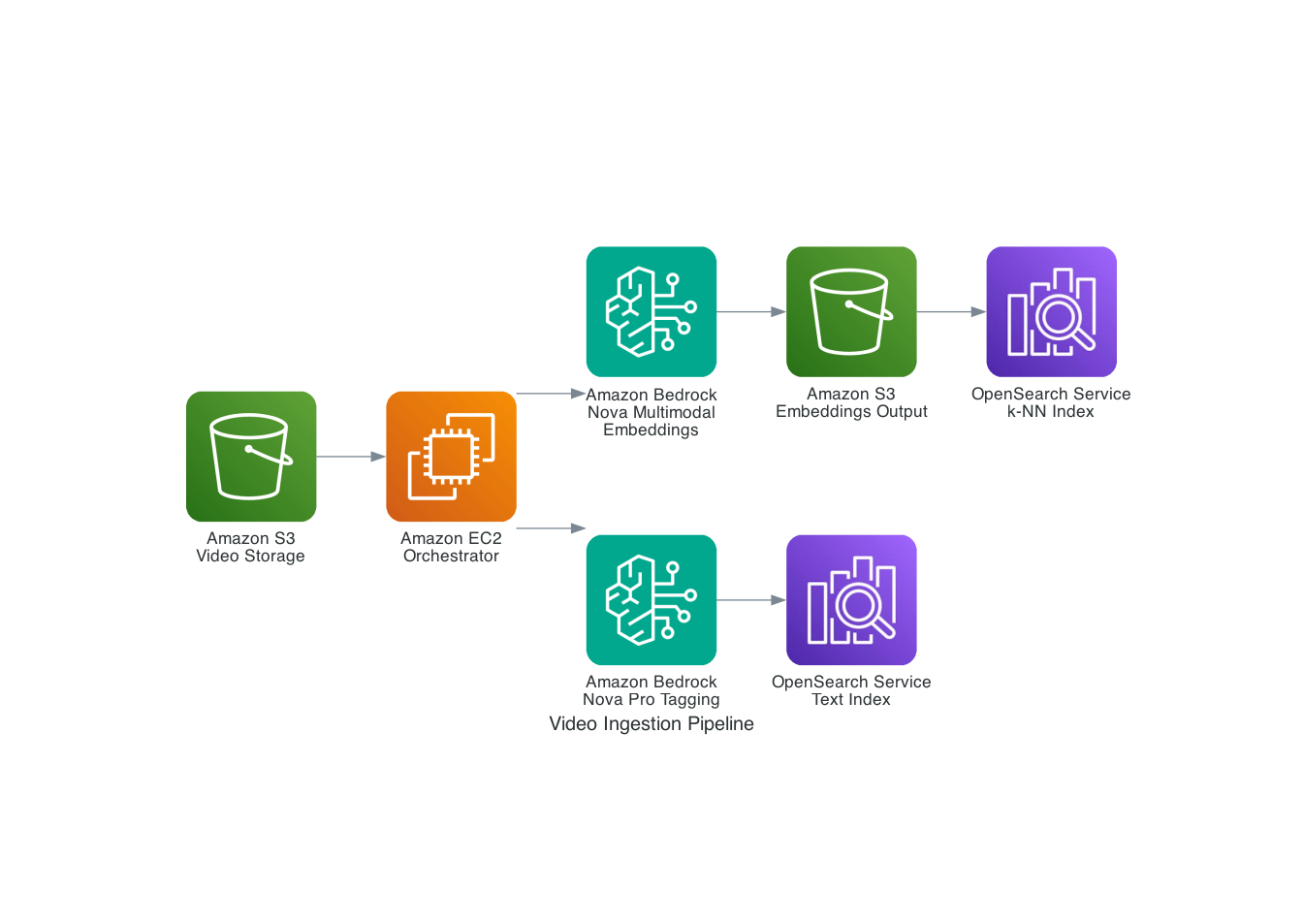
איור 1: צינור עיבוד וידאו המציג את הזרימה מאחסון וידאו ב-S3 דרך הטמעות מולטימודליות של Nova ו-Nova Pro לאינדקסים כפולים של OpenSearch
העצמת יכולות חיפוש וידאו מגוונות
ארכיטקטורת החיפוש מתוכננת לגמישות, ומציעה מספר מצבי גילוי תוכן:
-
חיפוש טקסט לווידאו: משתמשים יכולים להזין שאילתות בשפה טבעית, כגון "צילום רחפן של עיר שוקקת בלילה" או "צילום תקריב של שף מכין ארוחה גורמה". המערכת ממירה שאילתות אלו להטמעות, ולאחר מכן מנצלת את אינדקס ה-k-NN של OpenSearch כדי למצוא מקטעי וידאו או סרטונים שלמים התואמים סמנטית את התיאור, גם אם המילים המדויקות אינן קיימות באף מטא-דאטה. זה אידיאלי לגילוי תוכן אינטואיטיבי ותכנון עלילה.
-
חיפוש וידאו לווידאו: לתרחישים שבהם למשתמש יש קליפ וידאו והוא רוצה למצוא תוכן דומה, מצב זה מצטיין. על ידי השוואת ההטמעות של הווידאו הקלט ישירות עם אלו שבאינדקס ה-k-NN של OpenSearch, המערכת יכולה לזהות תוכן דומה מבחינה ויזואלית ושמיעתית. זה בעל ערך רב לזיהוי צילומי B-roll, הבטחת עקביות תוכן, או גילוי יצירות נגזרות.
-
חיפוש היברידי: שילוב הטוב משני העולמות, חיפוש היברידי משלב דמיון וקטורי עם התאמת מילות מפתח מסורתית. הפתרון המוצע משתמש בגישה משוקללת (לדוגמה, 70% דמיון וקטורי ו-30% התאמת מילות מפתח). זה מבטיח דיוק ורלוונטיות גבוהים, ומאפשר למטא-דאטה ספציפית להנחות את החיפוש בעוד שהבנה סמנטית מספקת התאמות הקשריות רחבות. גישה זו יעילה במיוחד עבור שאילתות מורכבות הנהנות הן מתגים מדויקים והן מהבנה מושגית.
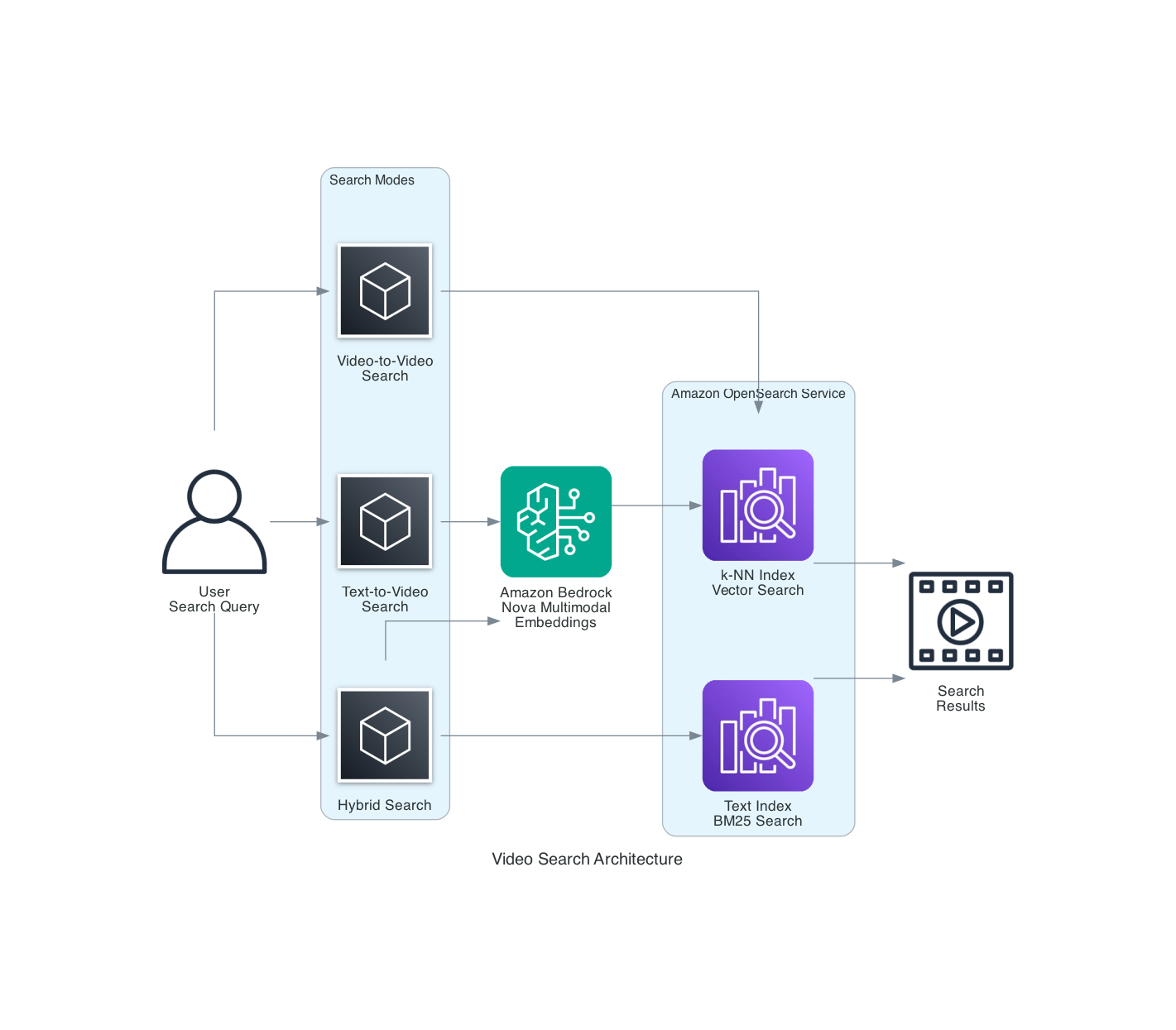
איור 2: ארכיטקטורת חיפוש וידאו המדגימה שלושה מצבי חיפוש – טקסט לווידאו, וידאו לווידאו, וחיפוש היברידי המשלב k-NN ו-BM25
פריסה חסכונית ותנאים מוקדמים
פריסת אגם נתונים מתוחכם כזה דורשת התייחסות מדוקדקת לתשתיות ולעלויות, אותן AWS ייעל עבור יעילות. העלות הכוללת לעיבוד מערכי הנתונים הנרחבים, כ-8,480 שעות של תוכן וידאו, הסתכמה בהערכה ראשונית של 27,328 דולר (עם OpenSearch לפי דרישה) או 23,632 דולר (עם מופעים שמורים של OpenSearch Service).
פירוט העלויות מצביע על מניעי עלות עיקריים:
- מחשוב Amazon EC2: 421 דולר (4 מופעי c7i.48xlarge spot למשך 41 שעות)
- הטמעות מולטימודליות של Amazon Bedrock Nova: 17,096 דולר (30.5 מיליון שניות במחיר של 0.00056 דולר לשנייה בתמחור אצווה)
- תיוג Nova Pro: 571 דולר (792 אלף סרטונים, ממוצע של כ-600 אסימונים לסרטון)
- Amazon OpenSearch Service: 9,240 דולר (שנתי לפי דרישה) או 5,544 דולר (שנתי שמור)
תנאים מוקדמים ליישום: כדי לשכפל או להתאים פתרון זה, תזדקקו ל:
- חשבון AWS עם גישה ל-Amazon Bedrock ב
us-east-1. - Python 3.9 ואילך.
- ממשק שורת פקודה של AWS (AWS CLI) מוגדר עם אישורים מתאימים.
- דומיין של Amazon OpenSearch Service (מומלץ r6g.large או גדול יותר), גרסה 2.11 ואילך, עם תוסף k-NN מופעל.
- דלי Amazon S3 לאחסון וידאו ותוצרי הטמעה.
- הרשאות AWS Identity and Access Management (IAM) עבור Amazon Bedrock, OpenSearch Service ו-Amazon S3.
הפתרון ממנף שירותים ומודלים ספציפיים של AWS:
- Amazon Bedrock עם
amazon.nova-2-multimodal-embeddings-v1:0עבור הטמעות. - Amazon Bedrock עם
us.amazon.nova-pro-v1:0אוus.amazon.nova-2-lite-v1:0עבור תיוג. - Amazon OpenSearch Service 2.11+ עם תוסף k-NN.
- Amazon S3 לאחסון.
יישום פתרון חיפוש הווידאו המולטימודלי
ההתחלה עם ארכיטקטורה זו כוללת גישה מובנית להגדרת סביבת AWS שלכם. הצעד הקריטי הראשון הוא יצירת ההרשאות הנדרשות.
שלב 1: יצירת תפקידי ומדיניות IAM
יהיה עליכם ליצור תפקיד IAM המעניק ליישום או לשירות שלכם את הסמכות לתקשר עם רכיבי AWS השונים. תפקיד זה חייב לכלול הרשאות להפעיל מודלים של Amazon Bedrock (הן ליצירת הטמעות והן לתיוג), לכתוב נתונים לאינדקסים של OpenSearch, ולבצע פעולות קריאה/כתיבה על דלי S3 של Amazon שבהם נמצאים תוכן הווידאו ותוצרי העיבוד שלכם.
הנה דוגמה למבנה מדיניות IAM בסיסית:
{
  "Version": "2012-10-17",
  "Statement": [
    {
      "Effect": "Allow",
      "Action": [
        "bedrock:InvokeModel",
        "bedrock:StartAsyncInvoke",
        "bedrock:GetAsyncInvoke",
        "bedrock:List"
      ],
      "Resource": "arn:aws:bedrock:us-east-1::foundation-model/amazon.nova-*"
    },
    {
      "Effect": "Allow",
      "Action": [
        "s3:GetObject",
        "s3:PutObject",
        "s3:ListBucket"
      ],
      "Resource": [
        "arn:aws:s3:::your-video-bucket/*",
        "arn:aws:s3:::your-video-bucket"
      ]
    },
    {
      "Effect": "Allow",
      "Action": [
        "es:ESHttpPost",
        "es:ESHttpPut",
        "es:ESHttpDelete",
        "es:ESHttpGet"
      ],
      "Resource": "arn:aws:es:us-east-1:*:domain/your-opensearch-domain/*"
    }
  ]
}
מדיניות זו מעניקה הרשאות ספציפיות החיוניות לפעולת הצינור. זכרו להחליף מצייני מיקום כמו your-video-bucket ו-your-opensearch-domain בשמות המשאבים בפועל שלכם. לאחר הגדרת IAM, תמשיכו בהגדרת דלי S3 שלכם, הגדרת דומיין OpenSearch Service שלכם עם k-NN מופעל, ופיתוח לוגיקת התיאום הממנפת את ממשקי ה-API של Bedrock לצורך עיבוד. מסגרת חזקה זו מבטיחה שחברות מדיה ובידור יוכלו לנהל, לגלות ולהפיק רווחים ביעילות מספריות התוכן ההולכות וגדלות שלהן, ובכך מסמנת קפיצת מדרגה משמעותית באינטליגנציית תוכן. פתרון מקיף זה הוא דוגמה לאופן שבו יכולות AI מודרניות, במיוחד בהבנה מולטימודלית, מגדירות מחדש את תקני התעשייה לניהול תוכן ונגישות. זהו עדות לכוח השילוב של מודלי AI מתקדמים עם תשתית ענן ניתנת להרחבה כדי לפתור אתגרי AI ארגוני בעולם האמיתי, תוך קידום התקדמויות דומות לאלו הנראות בתהליכי עבודה של AI סוכן.
שאלות נפוצות
What is a multimodal AI data lake for media and entertainment workloads?
How does the video ingestion pipeline handle large-scale datasets?
What types of video search capabilities does this solution enable?
Which AWS services are critical for building this multimodal embedding solution?
What are the cost considerations for deploying such a large-scale multimodal video search system?
Why is semantic search using multimodal embeddings superior to traditional keyword search for video content?
How does the Amazon Nova family of models contribute to this solution?
What are the benefits of using OpenSearch Service's k-NN index in this architecture?
הישארו מעודכנים
קבלו את חדשות ה-AI האחרונות לתיבת הדוא״ל.